It’s easy to attract wildlife to one’s backyard. Some might say the greater challenge is keeping it out. When I started birdfeeding, I put up a single feeder with some generic bird food. Over time, I learned not only how to attract different species, but also how to do it responsibly. If these posts inspire someone to take up bird feeding, I want them to know how to do it safely.
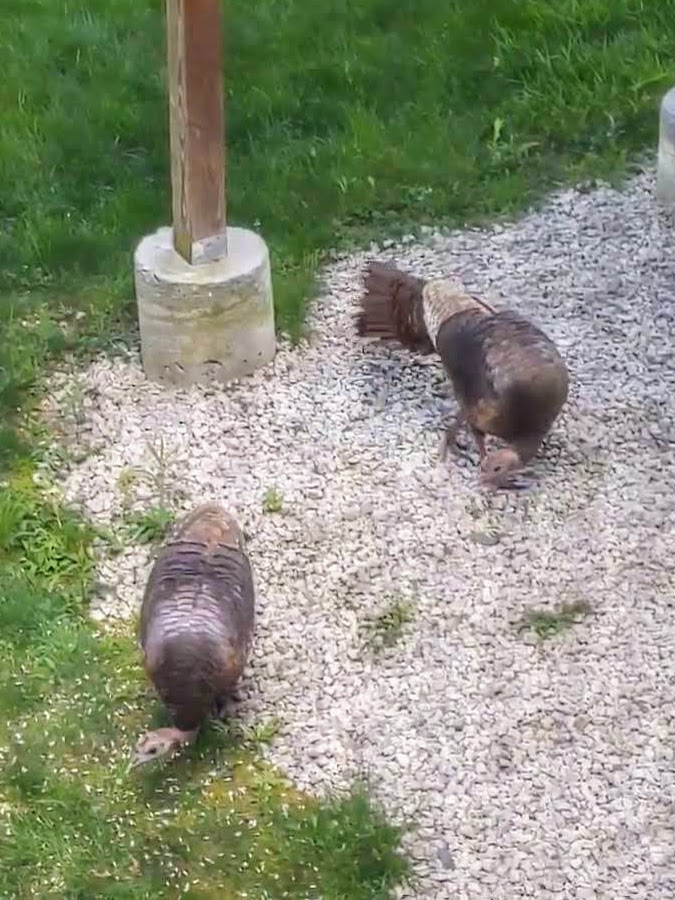
Image: Whose cleaning up under your bird feeders? I have wild turkeys on my clean-up crew.
Stay informed. Use the Merlin app to become familiar with the birds in your neighborhood. Record some birdsong and the app will let you know which birds are nearby in real time. Just watch out for mockingbirds – AI can’t detect mimicks (yet).
Sign up for updates from your local Audubon chapter. They provide warnings if feeders need to be taken down to prevent the spread of disease.
The bird migration tracker has made March’s mood swings more tolerable.
Stay safe. Keep bird feeders 4-6 ft away from windows, or use decals to prevent window strikes. More than a billion birds die in the United States each year from internal injuries related to flying into windows.
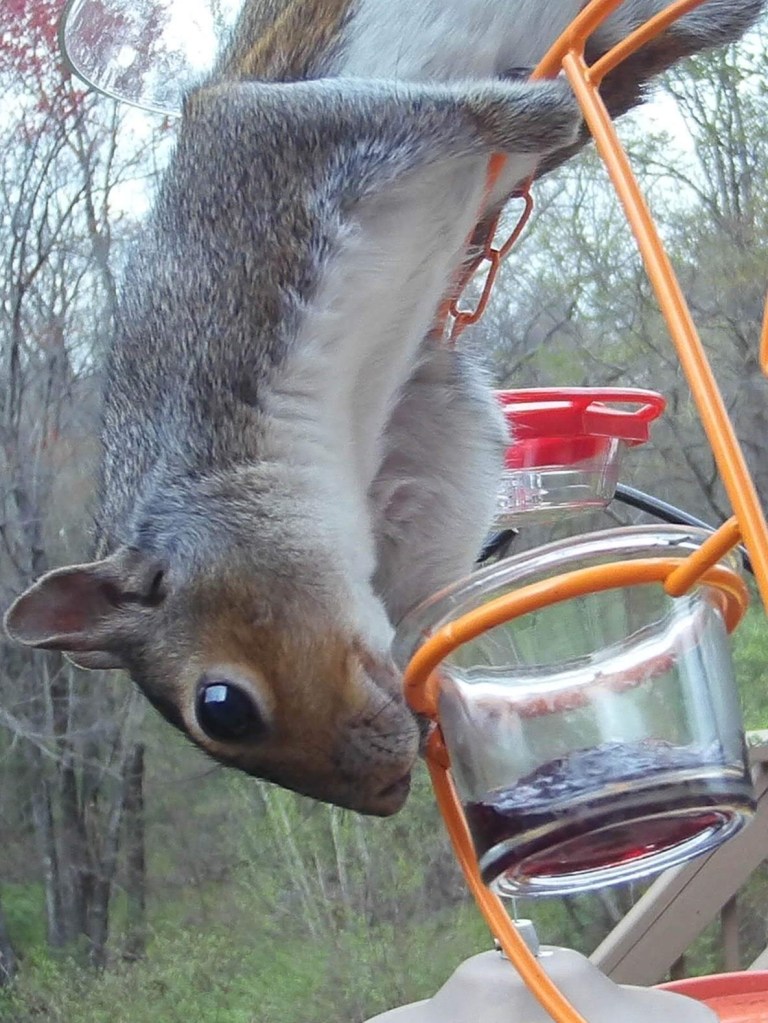
Image: Squirrels don’t know they’re not supposed to eat grape jelly.
Feeders should be cleaned once every 7-14 days. Since they bring birds into close contact, feeders can quickly spread disease through a local population.
Hummingbird feeders are a necessary source of food but they need to be meticulously maintained. Birds can and do get sick from contaminated nectar. The nectar should be changed every few days, and daily in hot weather. Avoid glass feeders that are hard to clean or heat up in the sun. To keep ants away invest in an ant-moat. Dish-shaped feeders attract fewer bees and wasps.
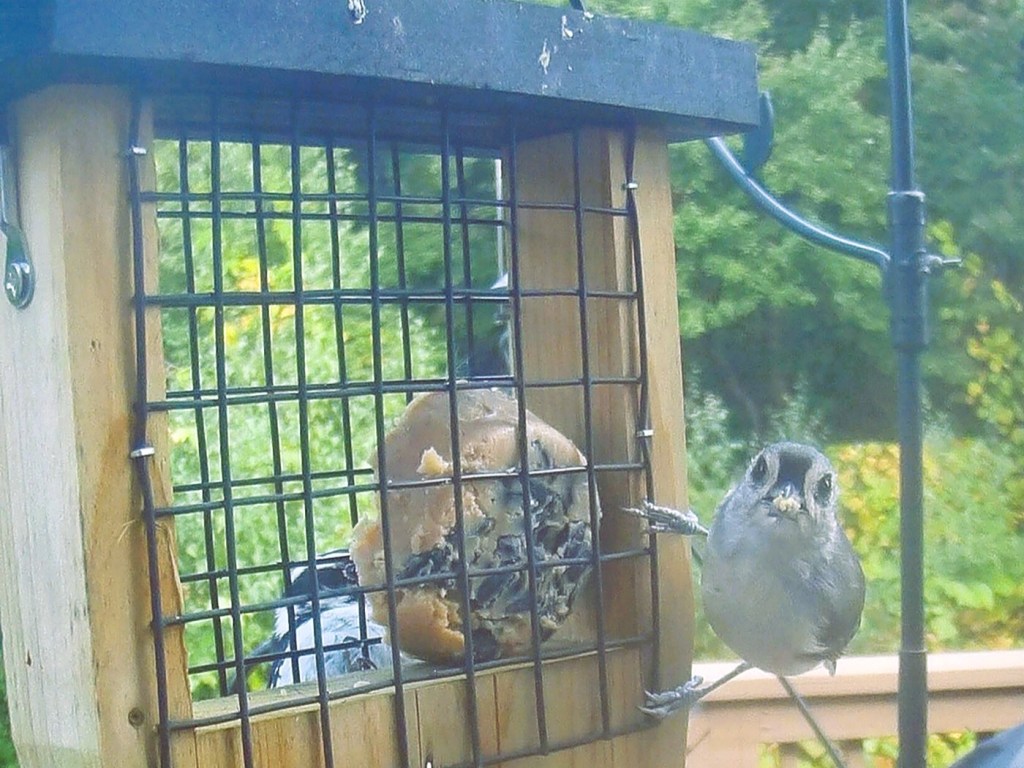
A cage suet-feeder provides high fat fuel in winter. Put these away when it gets warm. Melted fat can coat bird feathers damaging their natural insulative properties and make it impossible for them to fly.
Experiment. Different feed attracts different birds. Recently, I have switched to growing nectaring flowers like zinnia and salvia to reduce the risk of accidentally serving moldy nectar. A number of these plants can be grown in containers in limited space. Native species like Columbine and Cardinal flower are ideal – they support the local ecosystem and thrive with minimal maintenance.
Sunflower seed is the gold standard for attracting songbirds. However, in my experience the squirrels eat it all before the birds get a chance. I switched to safflower seed which the squirrels don’t love nearly as much.
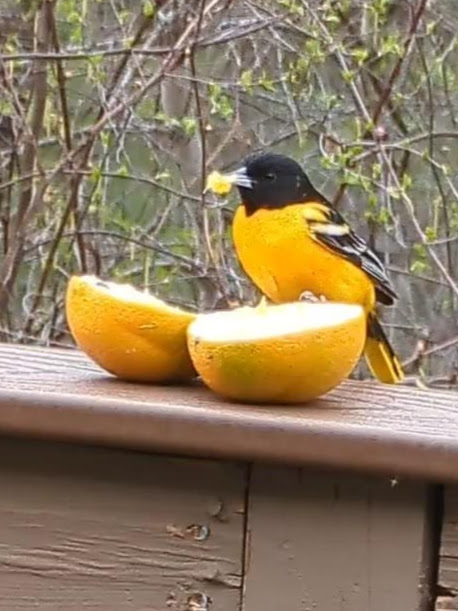
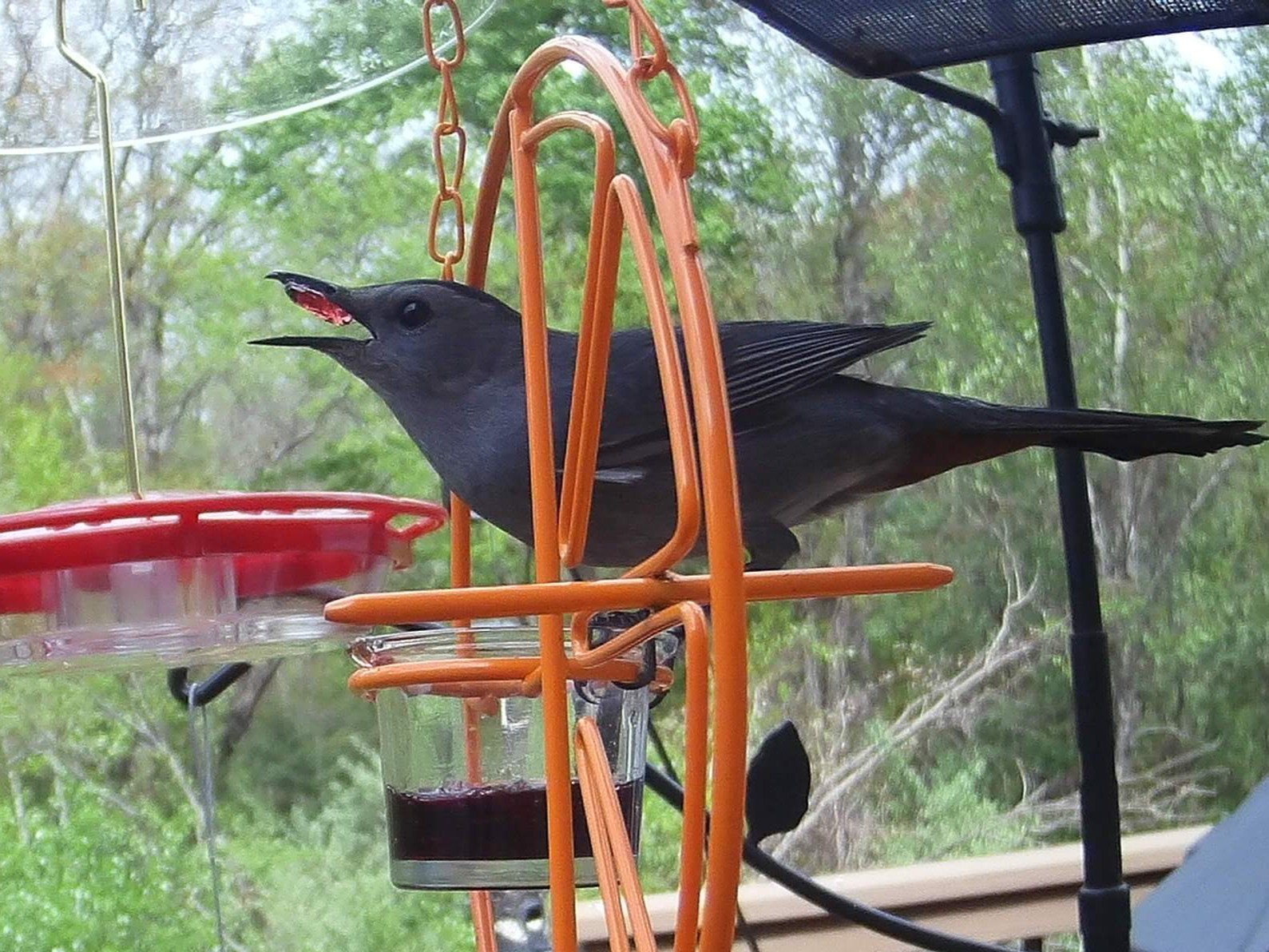
Grape-jelly and orange halves are loved by catbirds, orioles, raccoons and my neighborhood squirrels. Alternatively, plant some native berry-producing shrubs like elderberry or blueberry.
Mixed birdfood sometimes contains ingredients like millet and cracked corn that can attract more aggressive birds like starlings and grackles.
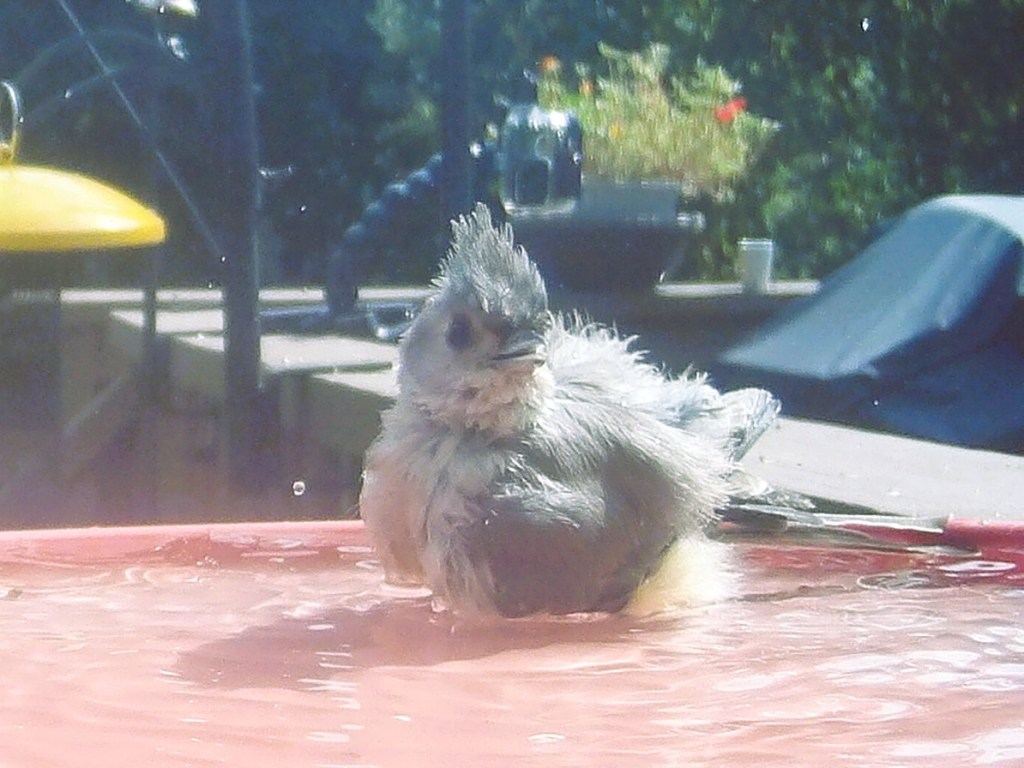
Birds need water too! Keep it shallow – no more than 1-2” deep, or add rocks to prevent birds from accidentally drowning. A heated bird bath in the winter may be the only available source of water for some birds. If you’re craftsy, there’s a lot of DIY solar fountain bird bath tutorials online.
Previous post: Choosing a camera
Next post: Using ChatGPT to come up with a plan
 Kriti Charan
Leave a comment